Ceiling Fan Cleaning Tips: Why It Matters More Than You Think
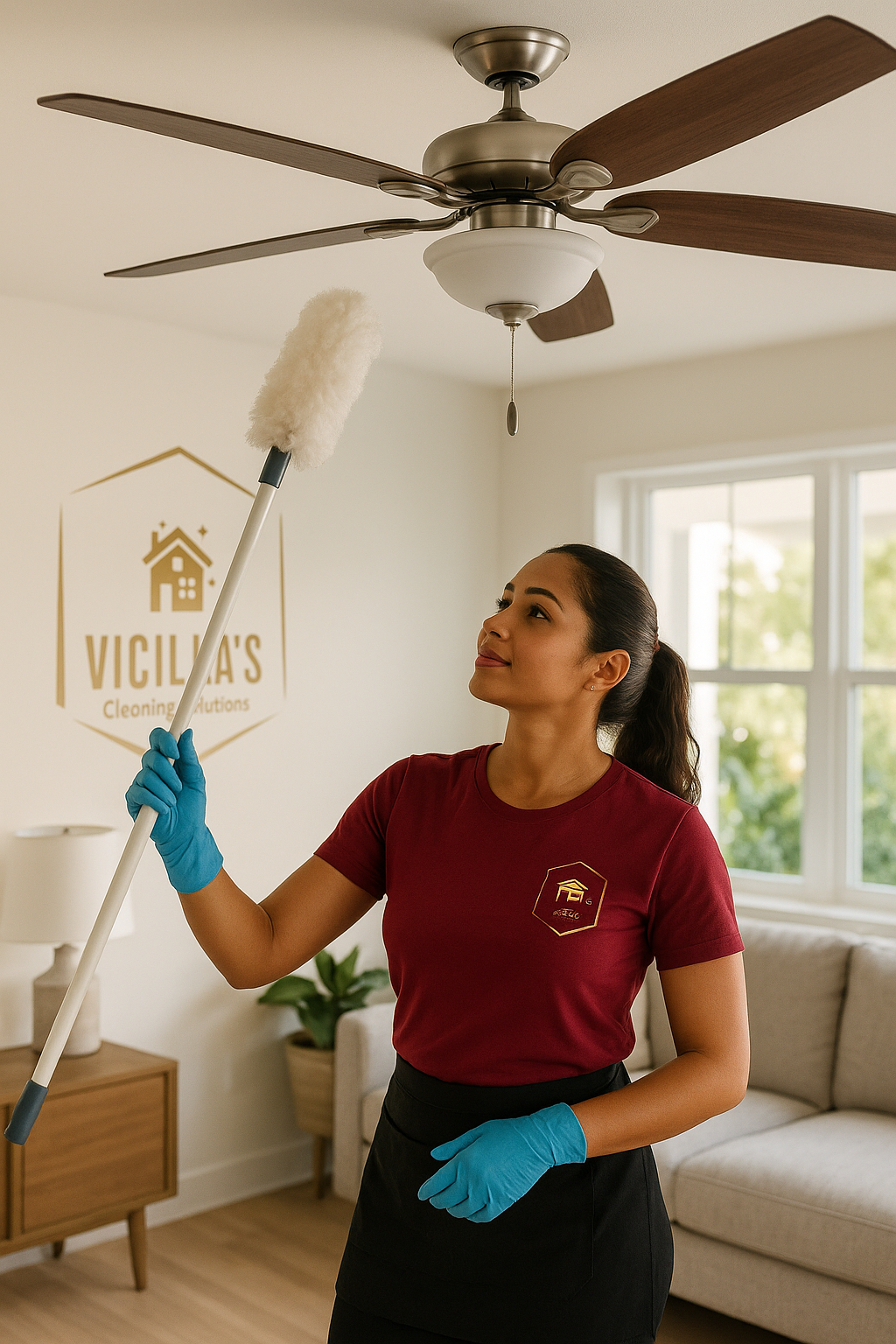
Ceiling fans — they're one of the most overlooked areas in a home.
Most people don't notice them until they look up one day and see something shocking: a thick layer of dust, settled like a wool blanket on each blade.
You'd be surprised how often my team and I walk into a beautiful home in St. Petersburg, Downtown St. Pete, Clearwater, Largo, or Pinellas Park — spotless floors, shiny counters, organized spaces — and then the homeowner says:
"Oh my God, I never realized how dirty my fans were until you cleaned them."
Fans collect an unbelievable amount of dust, pollen, pet dander, and Florida humidity grime. And cleaning them isn't just about aesthetics — it's about your health, your air quality, and your energy efficiency.
Here's why.
1. Dirty Fans Spread Dust Everywhere (Even If You Don't Notice It)
When a ceiling fan spins, it becomes a dust distributor.
Every rotation sends tiny particles flying across the room: onto furniture, onto bedding, into the air you breathe. If you've ever wondered why a room gets dusty again so quickly, even after you clean… a dusty fan is often the reason.
- Homes with pets? Even worse.
- Homes with allergies? Double that.
Cleaning fans regularly keeps your entire home cleaner — longer. This is especially important for homes across Tampa Bay, Seminole, and Gulfport where humidity accelerates dust buildup.
2. Dirty Fans Make Allergies 10x Worse
If you live in Tampa Bay, you already know we deal with:
- Pollen
- Humidity
- Mold spores
- Sand and outdoor dust
- Pet dander
- Spring and fall allergens
All of that sticks to fan blades like glue.
When fans aren't cleaned, they constantly circulate allergens, which can cause:
- Sneezing
- Itchy eyes
- Coughing
- Morning fatigue
- Runny nose
- Trouble breathing
I've had clients in Clearwater and St. Pete Beach tell me they slept better the same night after we cleaned their ceiling fans, because cleaner air = better rest.
3. Dust Build-Up Actually Damages the Fan Motor
Here's something most people don't know:
When dust sits on fan blades, it creates weight imbalance. That imbalance puts strain on the fan motor, causing:
- Wobbling
- Noise
- Reduced lifespan
- Higher chances of malfunction
If you've ever heard your fan start making a strange noise… it might just need a good cleaning.
Cleaning your fans is simple maintenance that protects your investment.
4. Clean Fans Improve Airflow and Keep Rooms Cooler
In Florida, fans are essential, especially with our heat.
But dirty blades = reduced airflow. The motor has to work harder. You don't feel as cool. Your AC has to compensate. Your electricity bill goes up.
Clean fans move air more efficiently, meaning:
- Your home stays cooler
- Your AC runs less
- You save money
This is one of those small things that creates a big difference in your comfort and your wallet, whether you're in Tampa, Largo, or Pinellas County.
5. Fans Collect Grease Film in Kitchens (Yes… It's Gross)
In kitchens, especially open-concept ones, fan blades collect:
- Oil particles from cooking
- Smells
- Smoke residue
- Sticky grime
It creates a greasy layer that traps dust like a magnet.
Cleaning kitchen fans is one of the quickest ways to remove lingering odors and freshen the space.
6. The Aesthetic Difference Is Huge
Even the most beautiful, modern, luxury-designed homes look "off" when fans are dusty.
I've cleaned high-end condos and elegant legacy homes across Downtown St. Pete and Palm Harbor, and I can tell you, the difference between a dusty fan and a sparkling one is almost like changing a light bulb. The whole room feels cleaner.
And if you're staging a home for sale or running an Airbnb? Dusty fans = instant bad impression.
7. Professional Fan Cleaning Is Safer (and Faster)
Fans collect dust in hard-to-reach areas. Most homeowners don't have the ladders, microfiber tools, or angle-safe techniques to clean them properly.
We do.
Our team uses:
- Extendable, anti-scratch fan dusters
- Drop cloths to protect your furniture
- Microfiber techniques that prevent dust fall
- Safe ladder positioning
- Special products for sticky blades in kitchens
What takes a homeowner 20–25 minutes per fan takes us 5 minutes with zero mess.
Tampa Bay Specifics: Why Fan Cleaning Matters Even More Here
Florida ceiling fans deal with a few problems most homeowners don't think about until they live with them.
Constant AC airflow. Tampa Bay homes run AC 9 to 10 months a year. That moves dust nonstop, and ceiling fans become collection points.
Salt air at the coast. Homes in St. Pete Beach, Pass-a-Grille, and Madeira Beach pull salt residue through screens and open sliders. That residue clings to blade leading edges and oxidizes brass and chrome hardware.
Pollen seasons. Oak pollen in February and March, then live oak catkins. Bedroom fans turn into pollen distributors right above your pillow.
Pet dander and beach sand. A dog that runs on the beach in Gulfport tracks salt and sand into the home, both of which end up airborne and on fan blades within days.
Tools and Supplies for a Mess-Free Fan Cleaning
What You'll Want on Hand
- •An old pillowcase (the single best dust-control tool for fan blades)
- •Sturdy step ladder rated for your weight, with a tool tray
- •Two microfiber cloths: one slightly damp, one dry
- •Drop cloth or old sheet for the floor below
- •Mild dish soap for kitchen fans (cuts grease film without damaging finish)
- •Extendable duster for between deep cleans
- •Soft brush attachment if your vacuum can reach
The Step-by-Step Pillowcase Method
- Turn off the fan and wait. Let the blades stop completely. If the fan was running, give it 60 seconds for airborne dust to settle.
- Lay down a drop cloth. Center it under the fan. Even with a pillowcase, some dust escapes.
- Slip a pillowcase over each blade. Press lightly on top and bottom, then pull the case back toward you. The dust collects inside.
- Wipe the blade with a damp microfiber. Both sides. Don't soak the blade. Wood blades especially hate water.
- Dry-finish each blade. A second clean microfiber removes any moisture and prevents new dust from sticking.
- Wipe the motor housing and pull chains. These collect grime too.
- Shake the pillowcase outside. Then toss it straight in the wash.
Common Mistakes That Make Fan Cleaning Worse
- Using a dry duster only. It just launches dust into the air, where it settles back on the blade and on every surface below.
- Soaking wood blades. Water swells and warps wood. Always wring the cloth nearly dry.
- Skipping the top of the blade. The top collects the heaviest layer. Miss it and you redistribute dust the next time the fan runs.
- Spraying cleaner directly on the blade. Overspray drifts onto walls, furniture, and floors. Always spray the cloth.
- Standing on a bed or chair. Use a real ladder. Falls from fan-cleaning are common ER visits.
- Forgetting kitchen fans. They develop the worst film and almost never get cleaned.
When to Call a Pro for Fan Cleaning
Most fans are DIY-friendly with the pillowcase method. Bring in a professional when:
- You have vaulted, double-height, or coffered ceilings (10+ feet)
- You have multiple fans throughout the home and limited time
- You have mobility or balance limitations that make ladders unsafe
- The fans are very dusty and you're allergy-sensitive
- You're prepping a property for sale, listing photos, or an Airbnb turnover
- The motor is making noise (we'll flag it for an electrician if it's beyond cleaning)
For more on what a thorough cleaning includes, see our guide on why a house still feels dirty after cleaning, or the broader Florida humidity and mold prevention guide.
Frequently Asked Questions
How often should I clean ceiling fans in Florida?
Every 4 to 6 weeks for active households or homes with pets. Every 6 to 8 weeks for lower-traffic spaces.
What's the safest way to clean a fan without making a mess?
The pillowcase method. Slip an old pillowcase over each blade, press lightly, then pull back. The dust stays inside.
Why does dust come back so quickly on Florida fans?
Humidity keeps a slight tackiness on blade edges, which grabs pollen, pet dander, and salt-air particles. AC running constantly recirculates that dust.
Can a dusty fan damage the motor?
Yes. Uneven dust creates weight imbalance, which causes wobble and strains the motor.
What about kitchen fans with grease buildup?
Use a degreaser-dampened microfiber on both sides of each blade, then dry-finish.
Should I clean blades top and bottom?
Always both sides. The top collects the heaviest dust because gravity holds it there.
Are professional fan cleanings worth it?
If you have multiple fans, vaulted ceilings, or limited mobility, yes. Faster and cleaner than DIY.
How Often Should You Clean Your Fans?
For Tampa Bay homes, especially with pets or open windows:
- Every 4 weeks for heavy use
- Every 6–8 weeks for normal homes
- Every turnover for Airbnbs
- Every listing for realtors preparing homes
When we take care of your home, fan cleaning is part of our detail-oriented standard.
Related Reading
Experience the Vicillas Difference
Fans might seem small, but they impact:
- Air quality
- Appearance
- Energy efficiency
- Allergies
- Daily comfort
At Vicillas Cleaning Solutions, we don't skip the details, we treat them as the work.
If you want a cleaning team who notices what others miss, who cares about the small things, and who treats your home with the respect it deserves…
Experience the Vicillas Difference
Tampa Bay's trusted choice for detail-oriented, professional cleaning. Serving St. Petersburg, Clearwater, Tampa, Largo, and all of Pinellas County.
Your air will feel cleaner, and so will your home.
Experience the Vicillas Difference
Ready to experience professional cleaning that goes beyond the surface? Let our trusted team bring peace of mind to your Tampa Bay home.
Related Articles

Why Your House Still Feels Dirty After Cleaning
The hidden reasons your home doesn't feel clean even after you scrub — and how to fix it for good.
Read more →
Monthly Cleaning Tasks Every Tampa Bay Home Needs
The once-a-month chores that prevent the big problems — Florida-specific edition.
Read more →
Common Cleaning Mistakes Tampa Bay Homeowners Make
The well-meaning habits that actually make your home dirtier.
Read more →